Similar Posts: Textile in Product Design / Gradient Textiles / Soft Tactile Audio Technologies
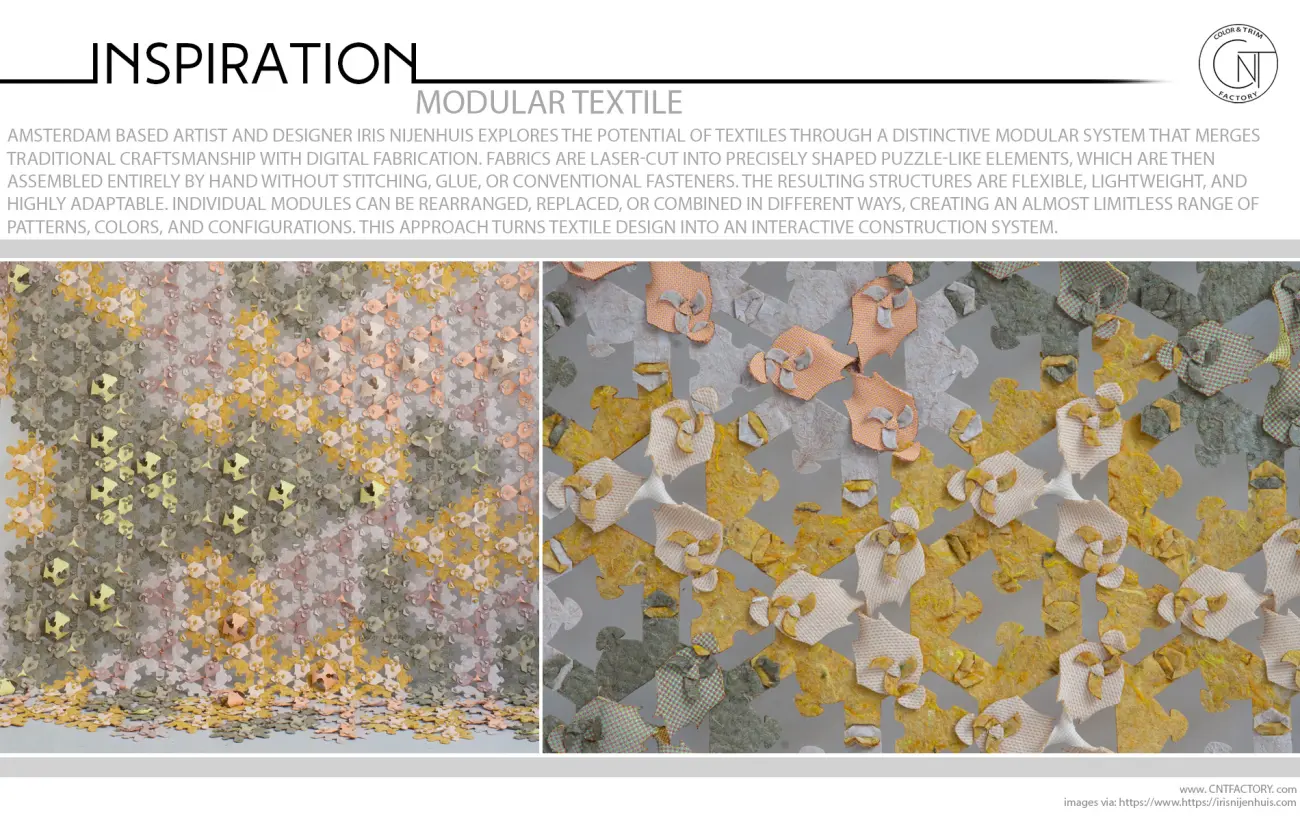
Amsterdam based artist and designer Iris Nijenhuis explores the potential of textiles through a distinctive modular system that merges traditional craftsmanship with digital fabrication. Fabrics are laser-cut into precisely shaped puzzle-like elements, which are then assembled entirely by hand without stitching, glue, or conventional fasteners.
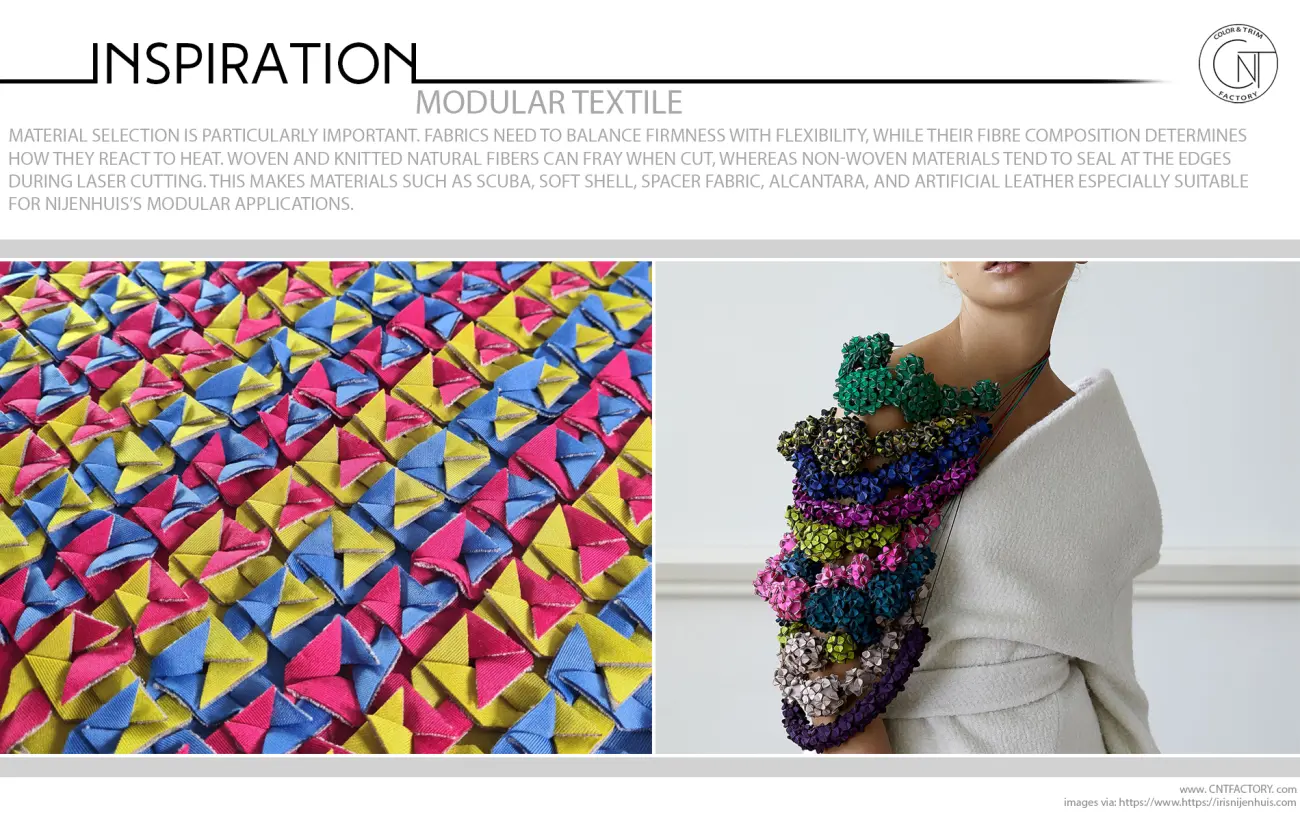
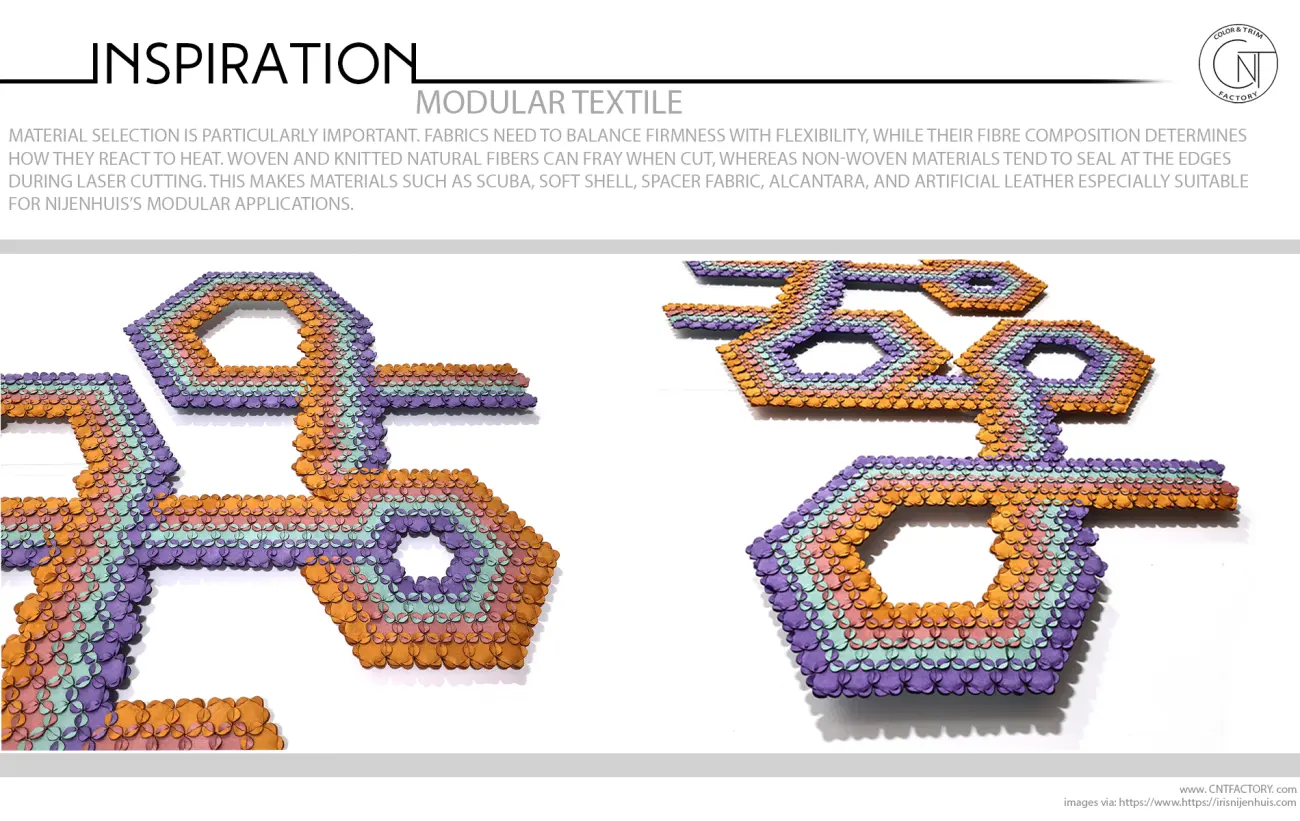
The resulting structures are flexible, lightweight, and highly adaptable. Individual modules can be rearranged, replaced, or combined in different ways, creating an almost limitless range of patterns, colors, and configurations. This approach turns textile design into an interactive construction system where one material can continuously evolve into something new.
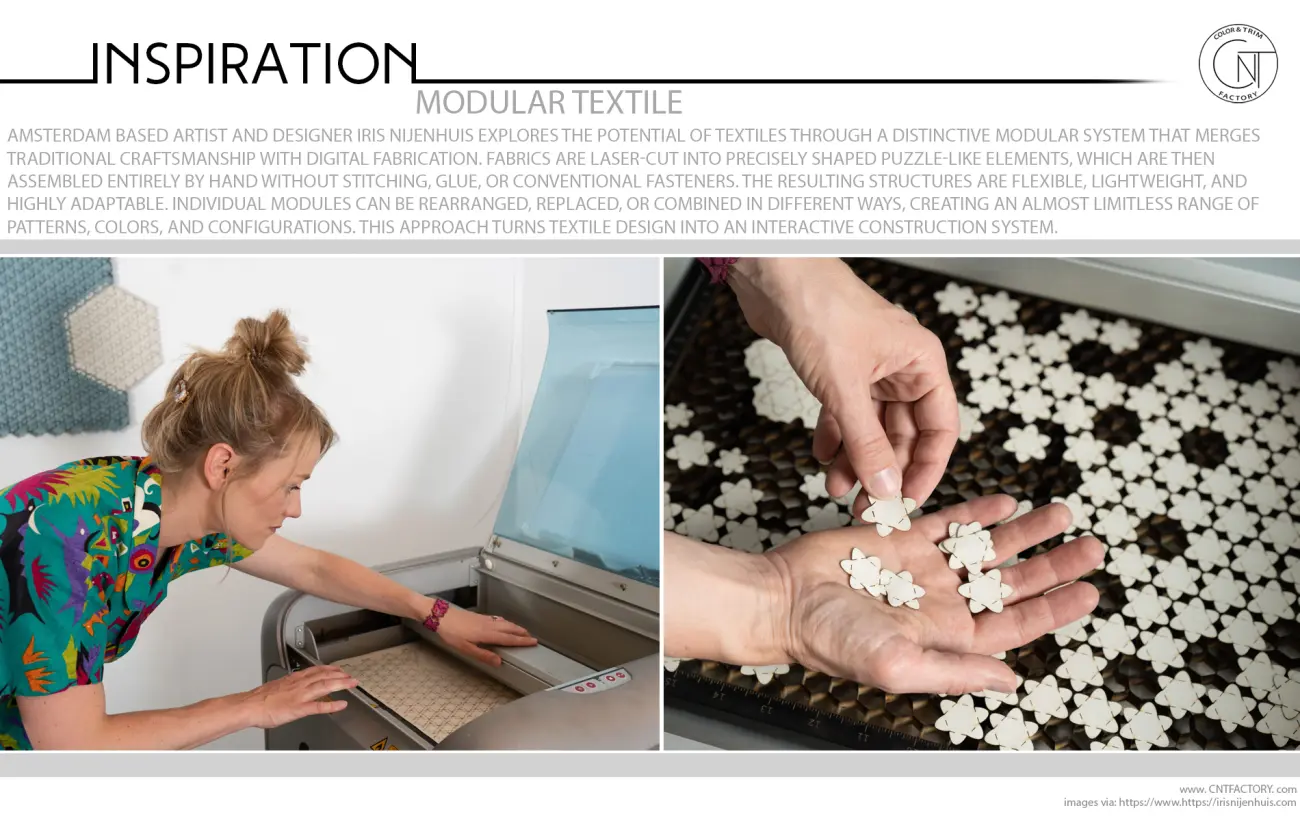
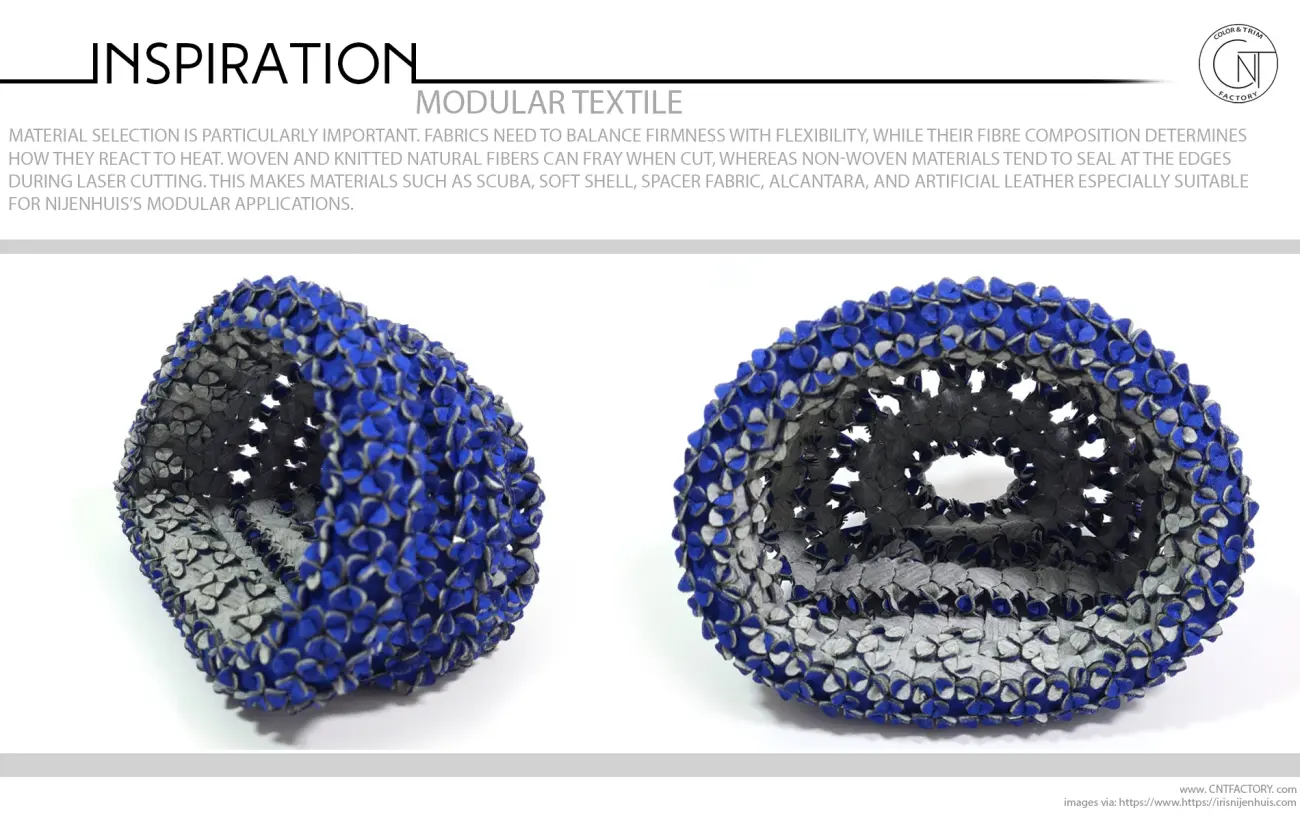
Material selection is particularly important. Fabrics need to balance firmness with flexibility, while their fibre composition determines how they react to heat. Woven and knitted natural fibers can fray when cut, whereas non-woven materials tend to seal at the edges during laser cutting. This makes materials such as scuba, soft shell, spacer fabric, Alcantara, and artificial leather especially suitable for Nijenhuis’s modular applications.
Beyond wearables, the technique extends into interior objects including lampshades and wall panels. Her practice often brings together discarded garments, existing materials, and contemporary fabrication methods, creating a dialogue between reuse, craftsmanship, and innovation.