Related Post: NewspaperWood / Paper Folding Art / Woven Details
Paper is emerging as an unexpected decorative trim material, bringing warmth, texture, and a handcrafted quality to products and interiors. Projects such as Issey Miyake’s Paper Logs demonstrate how discarded paper can be transformed into expressive surfaces and structural elements, while materials like Paper Look HDPE replicate paper’s tactile appeal in more durable applications.
As a trim material, paper offers a unique sensory experience. Its layered textures, visible fibers, and irregular patterns create depth and authenticity that contrast with the smooth perfection of conventional plastics. Whether made from recycled paper, compressed paper composites, or paper-inspired polymers, these surfaces introduce a softer, more natural aesthetic.
Beyond its visual qualities, paper-based trims align with growing interest in circularity and material storytelling. They can incorporate production byproducts, recycled content, or renewable fibers, allowing products to communicate sustainability through both appearance and material composition.
From automotive interiors and consumer electronics to furniture and lifestyle products, paper-inspired trims are redefining surface design by combining tactile richness, environmental consciousness, and contemporary craftsmanship.
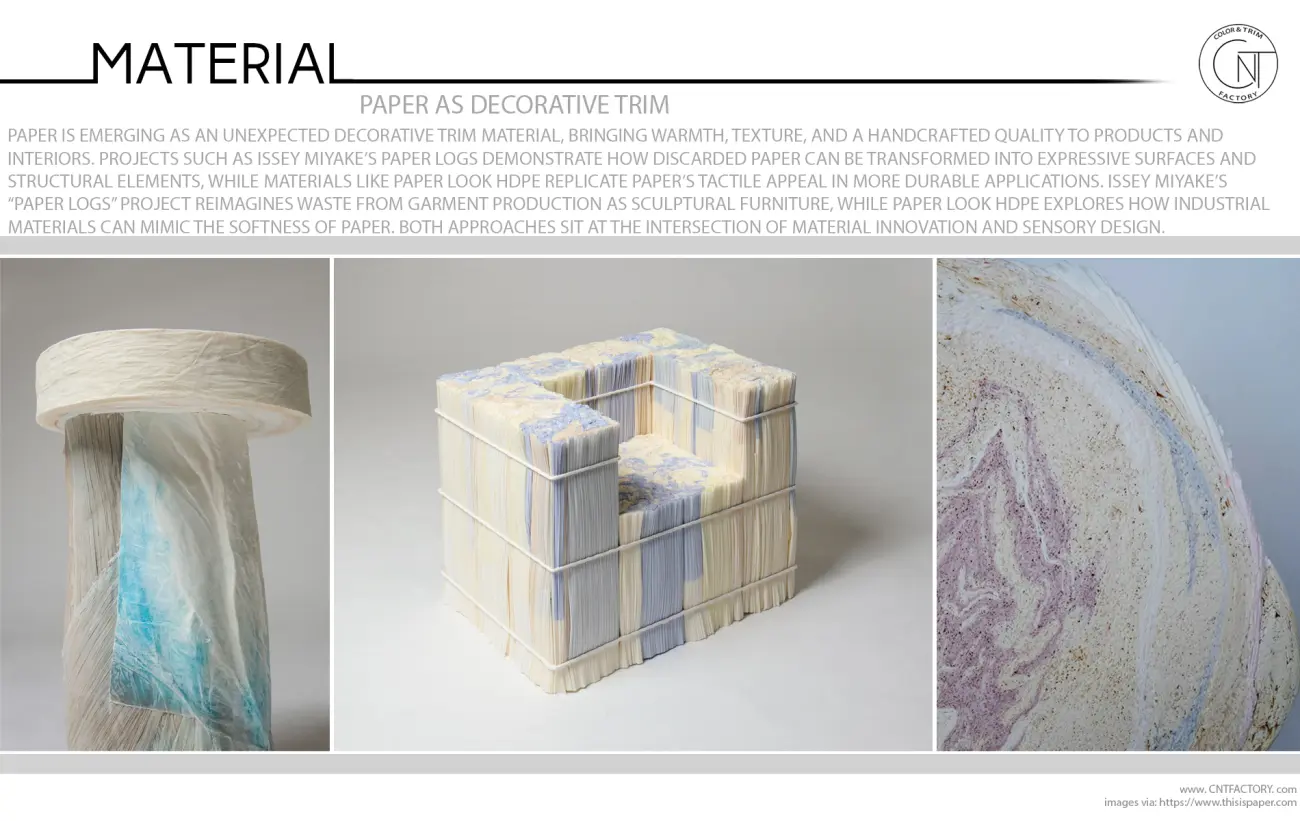
Issey Miyake’s “Paper Logs” project reimagines waste from garment production as sculptural furniture, while Paper Look HDPE explores how industrial materials can mimic the softness of paper. Both approaches sit at the intersection of material innovation and sensory design.
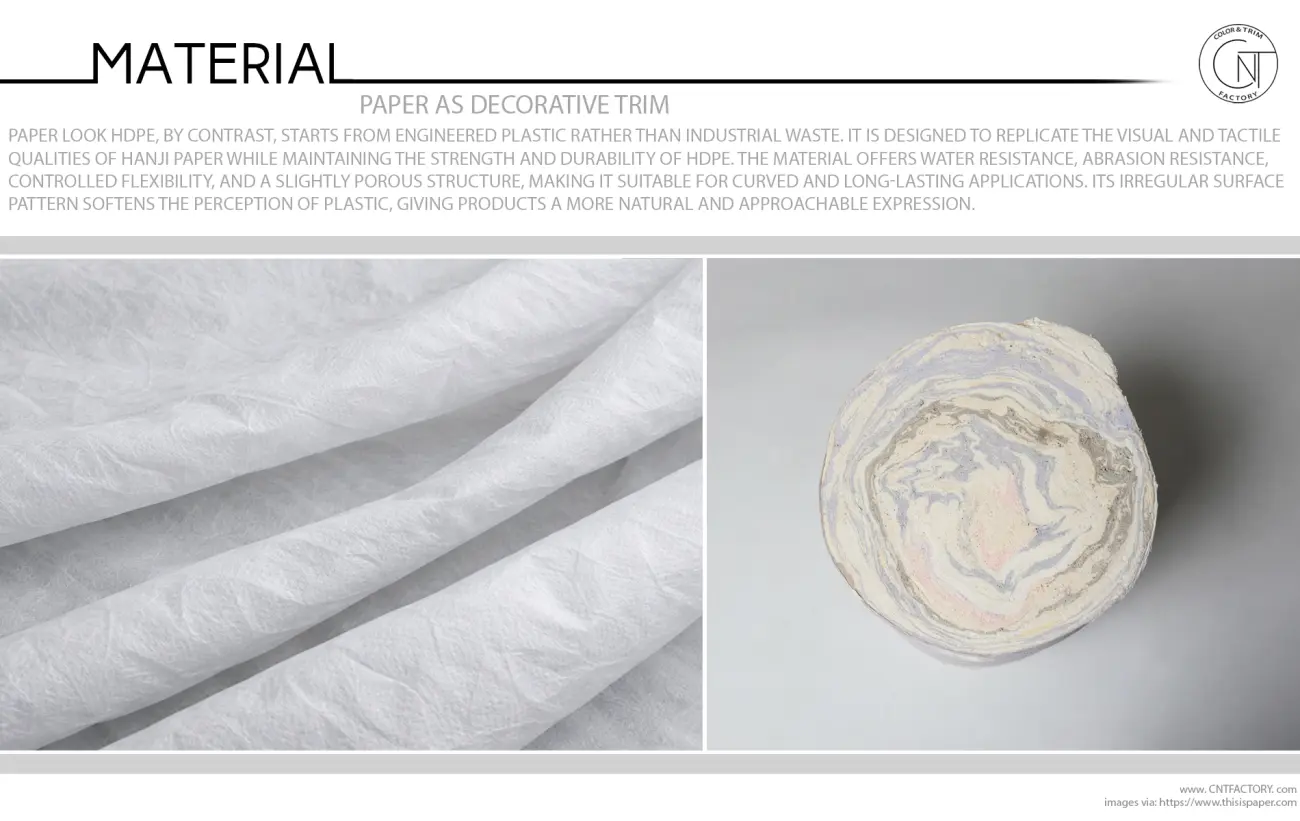
In the Issey Miyake project, compressed sheets used in pleating are typically discarded but are instead transformed into dense cylindrical “logs.” These are cut, carved, and reshaped into stools, chairs, tables, and benches. Each piece retains traces of the original textile process, with layered patterns, color imprints, and unique marbled cross-sections, making every object one of a kind. The work treats waste as a raw material, closer to wood in how it can be processed, while preserving the visual memory of garment production.
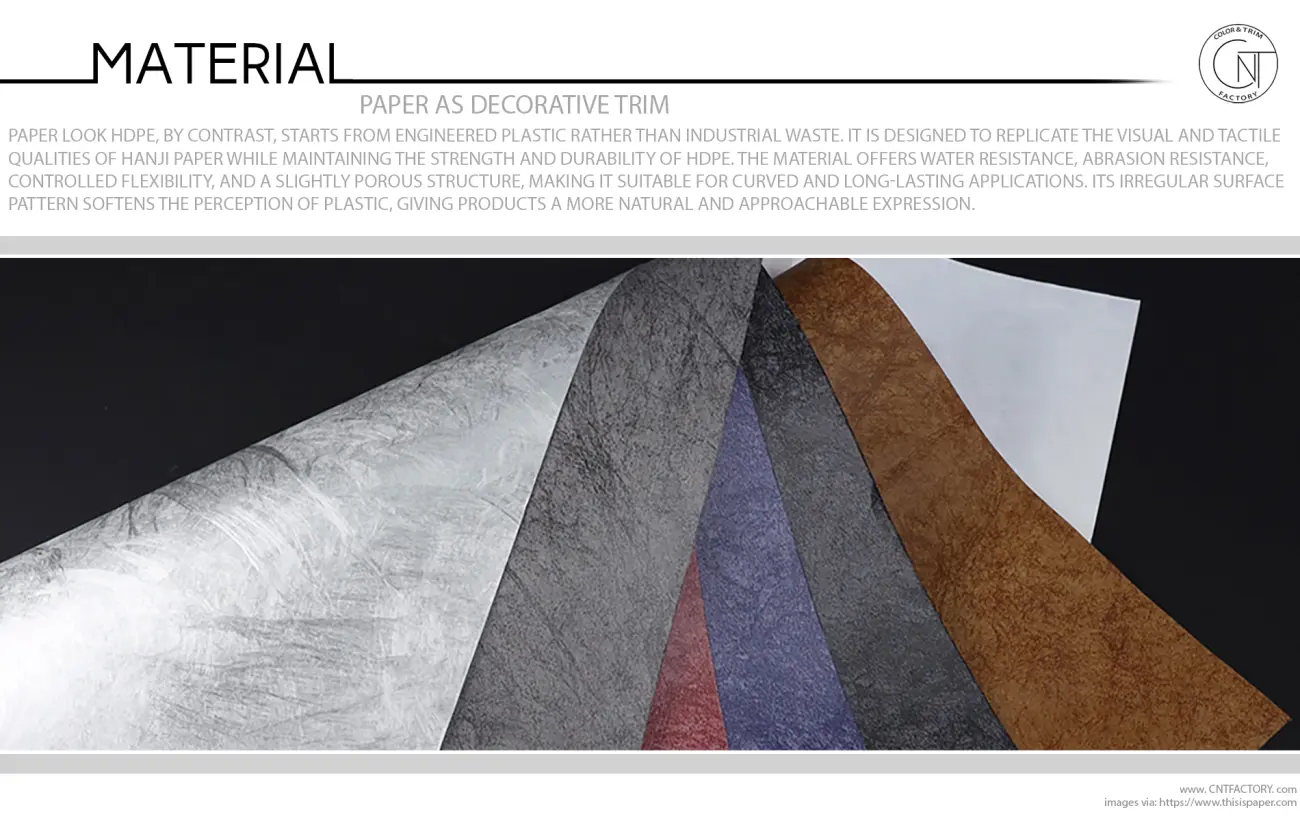
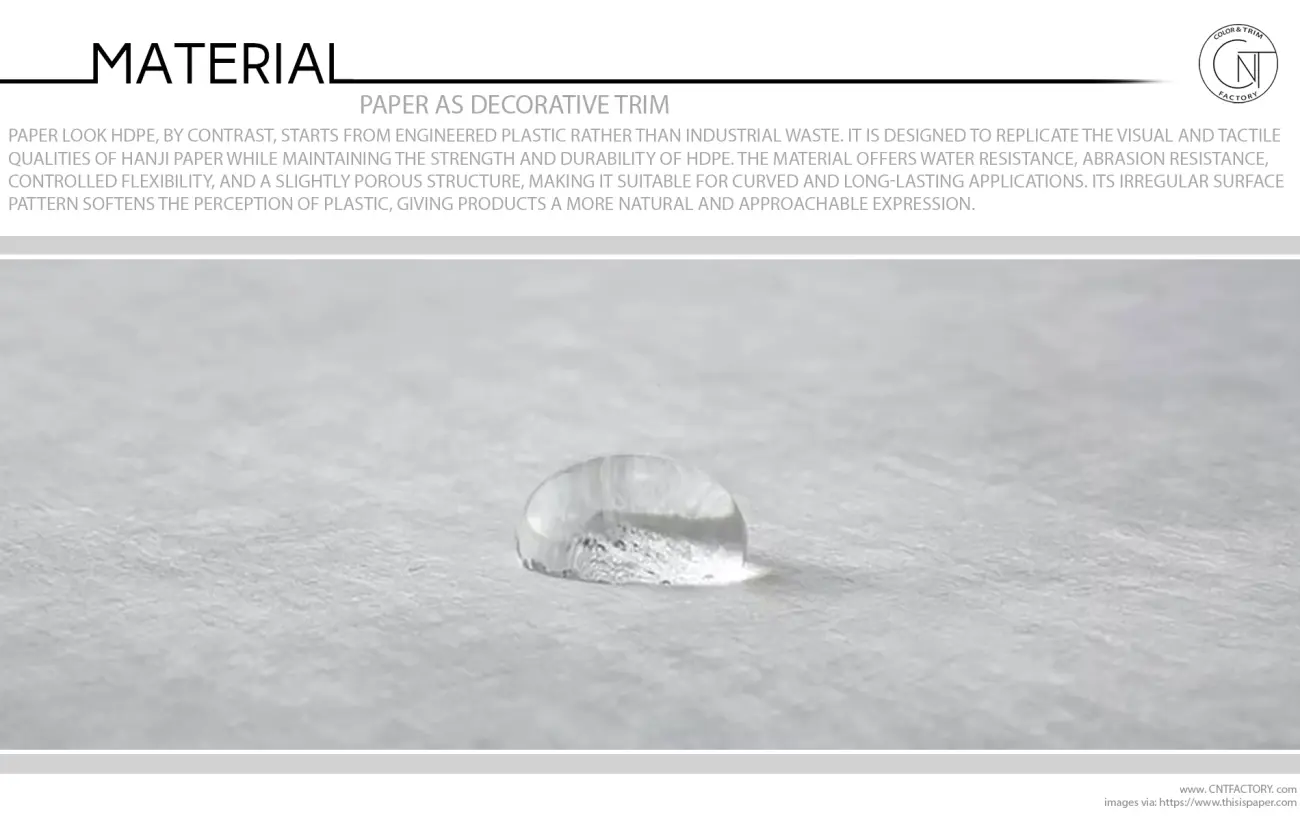
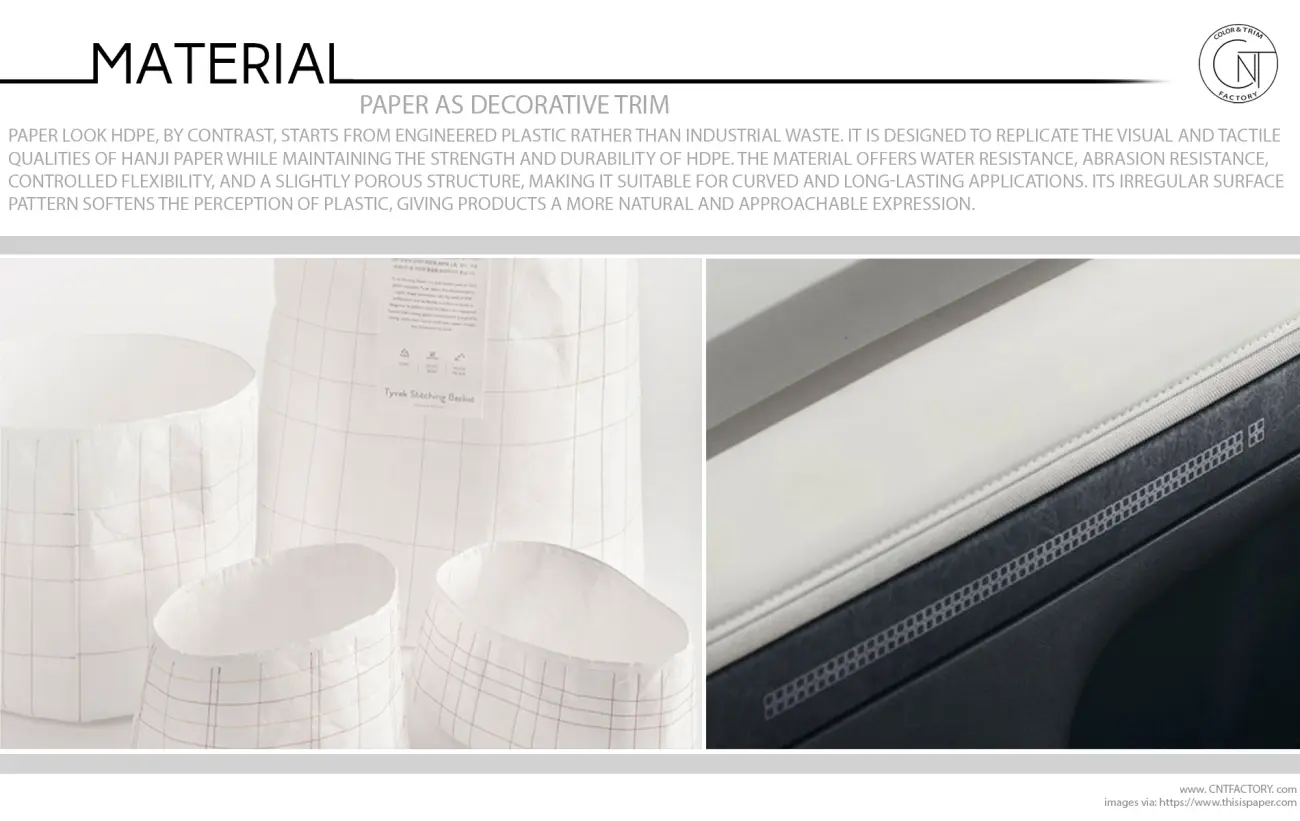
Paper Look HDPE, by contrast, starts from engineered plastic rather than industrial waste. It is designed to replicate the visual and tactile qualities of hanji paper while maintaining the strength and durability of HDPE. The material offers water resistance, abrasion resistance, controlled flexibility, and a slightly porous structure, making it suitable for curved and long-lasting applications. Its irregular surface pattern softens the perception of plastic, giving products a more natural and approachable expression.
Issey Miyake’s project emphasizes transformation of a byproduct into unique physical artifacts, Paper Look HDPE focuses on scaling a designed surface effect across industrial applications such as automotive interiors, appliances, packaging, and lifestyle products. Both, however, explore how material choices shape not only performance, but emotional and visual experience.