Similar Posts: Textile in Product Design / Gradient Textiles / Soft Tactile Audio Technologies
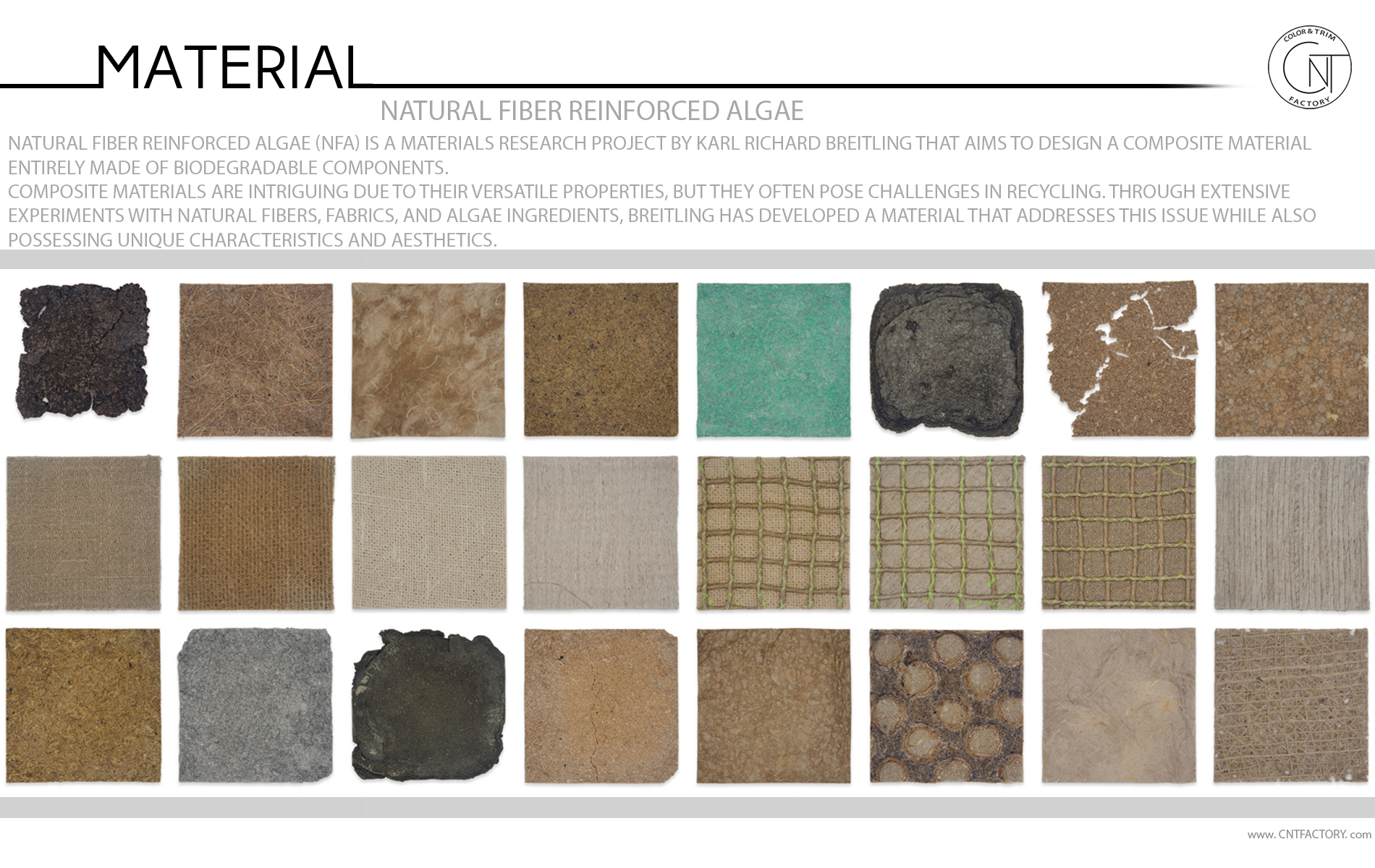
Natural fiber reinforced algae (NFA) is a materials research project by Karl Richard Breitling that aims to design a composite material entirely made of biodegradable components. Composite materials are intriguing due to their versatile properties, but they often pose challenges in recycling. Through extensive experiments with natural fibers, fabrics, and algae ingredients, Breitling has developed a material that addresses this issue while also possessing unique characteristics and aesthetics.
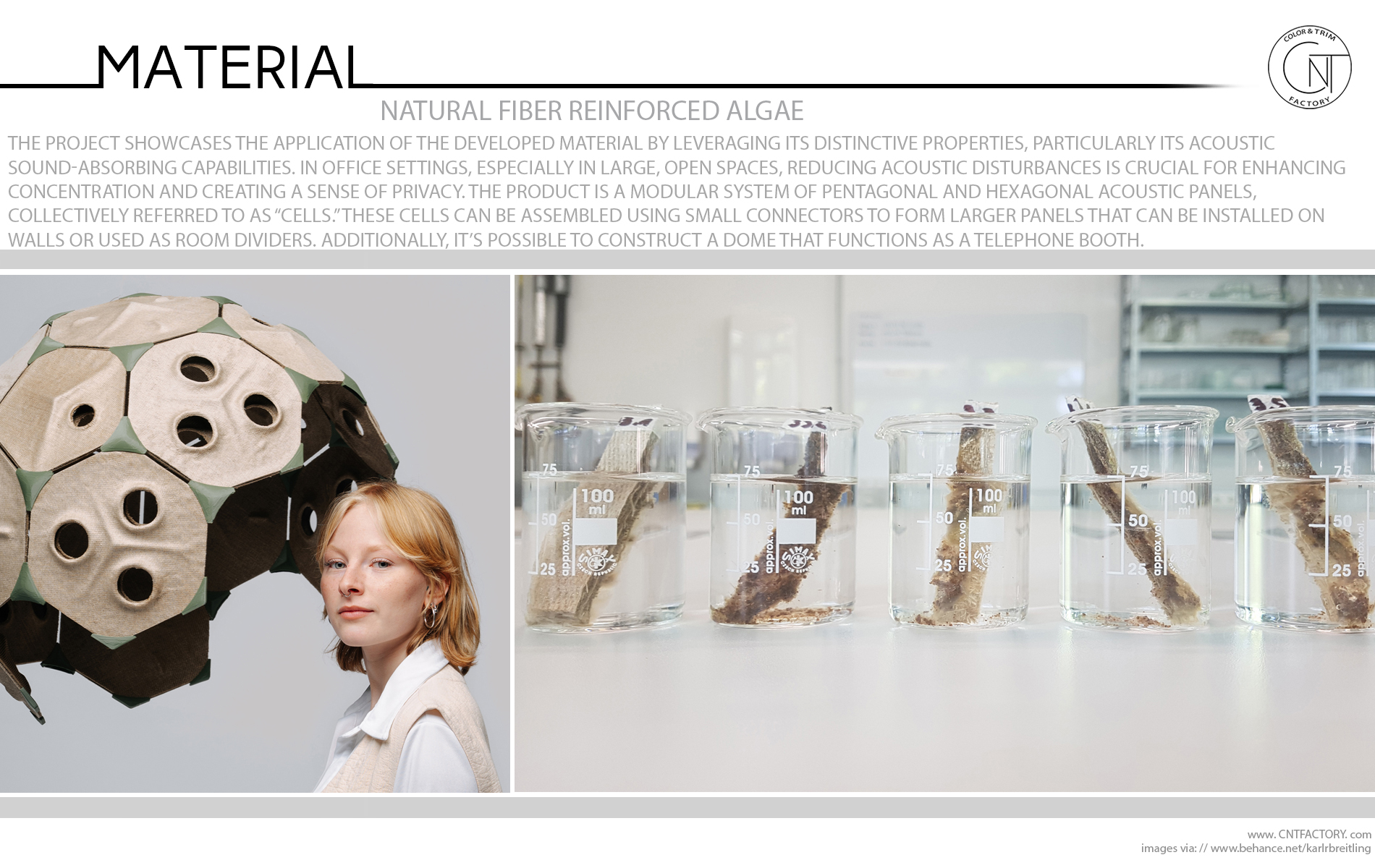
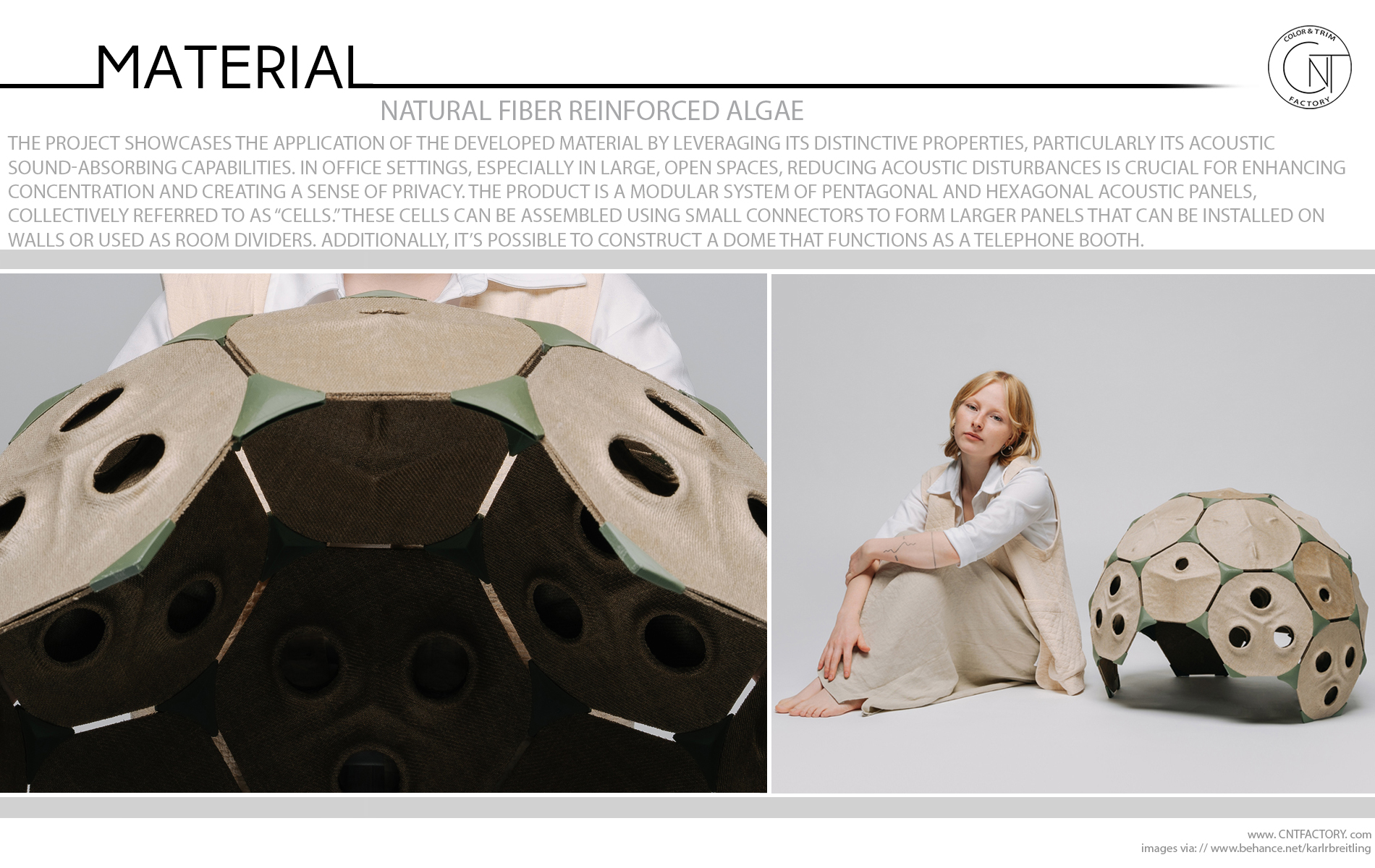
The project showcases the application of the developed material by leveraging its distinctive properties, particularly its acoustic/sound-absorbing capabilities. In office settings, especially in large, open spaces, reducing acoustic disturbances is crucial for enhancing concentration and creating a sense of privacy.
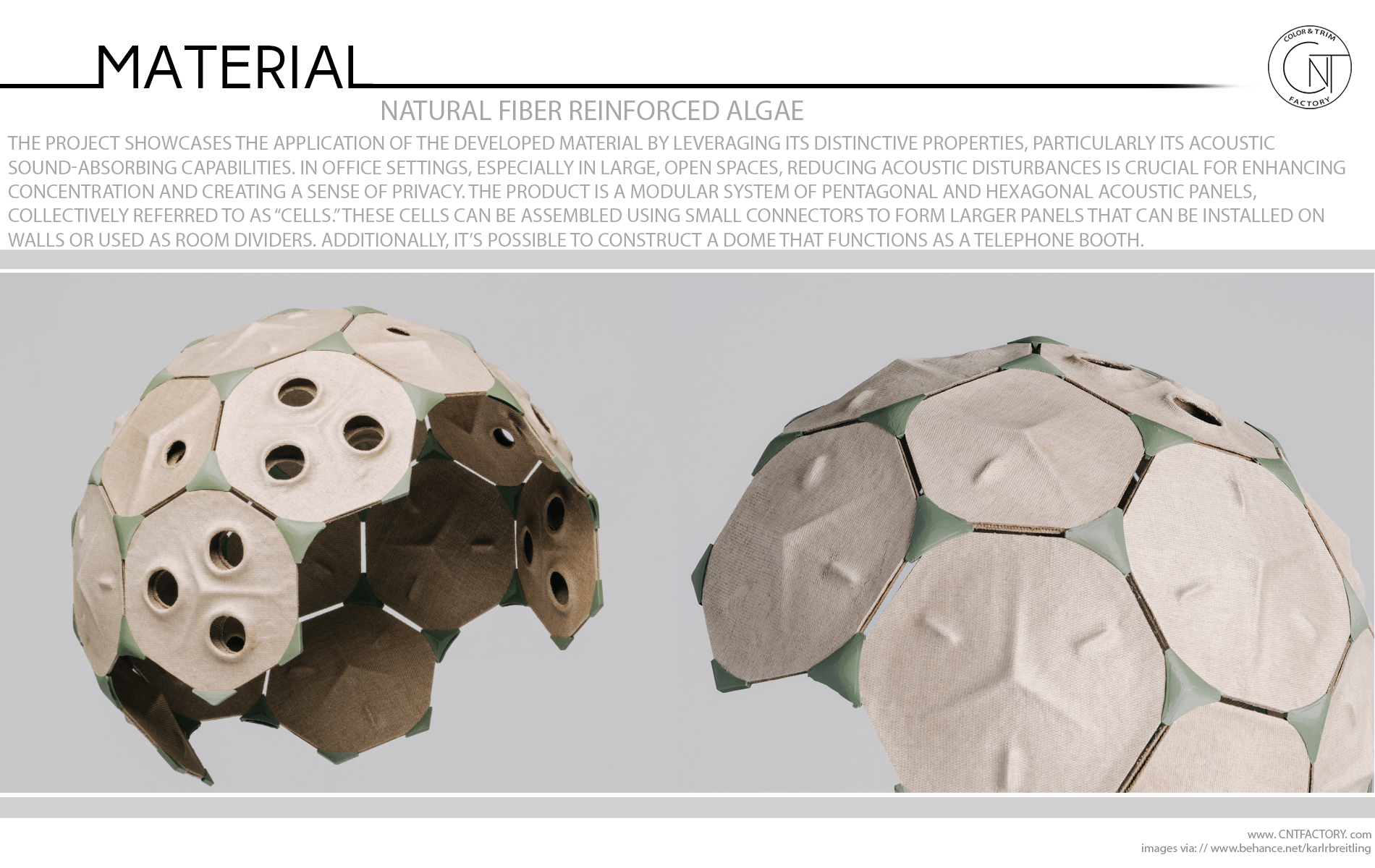
The product is a modular system of pentagonal and hexagonal acoustic panels, collectively referred to as “cells.” These cells can be assembled using small connectors to form larger panels that can be installed on walls or used as room dividers. Additionally, it’s possible to construct a dome that functions as a telephone booth.
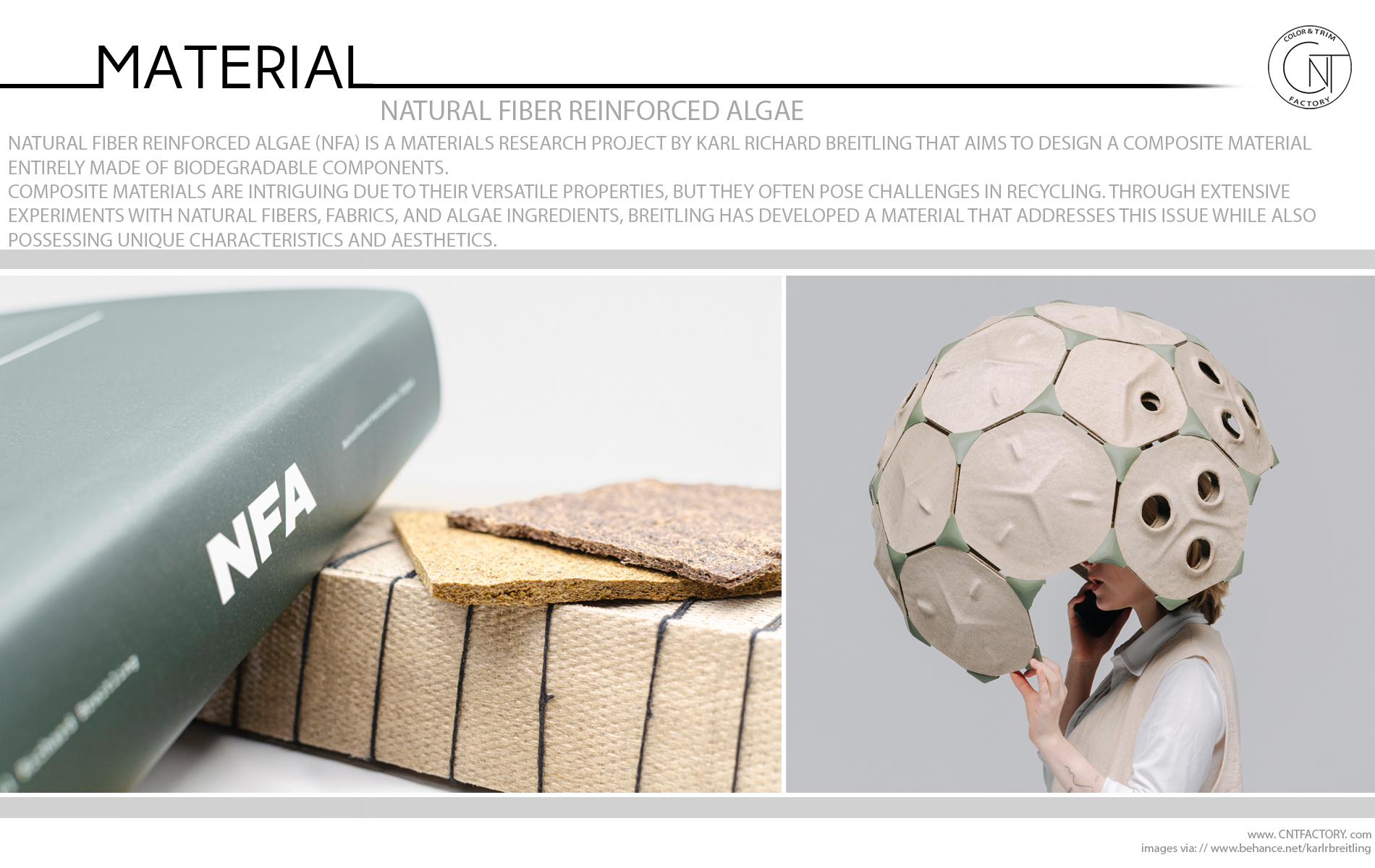
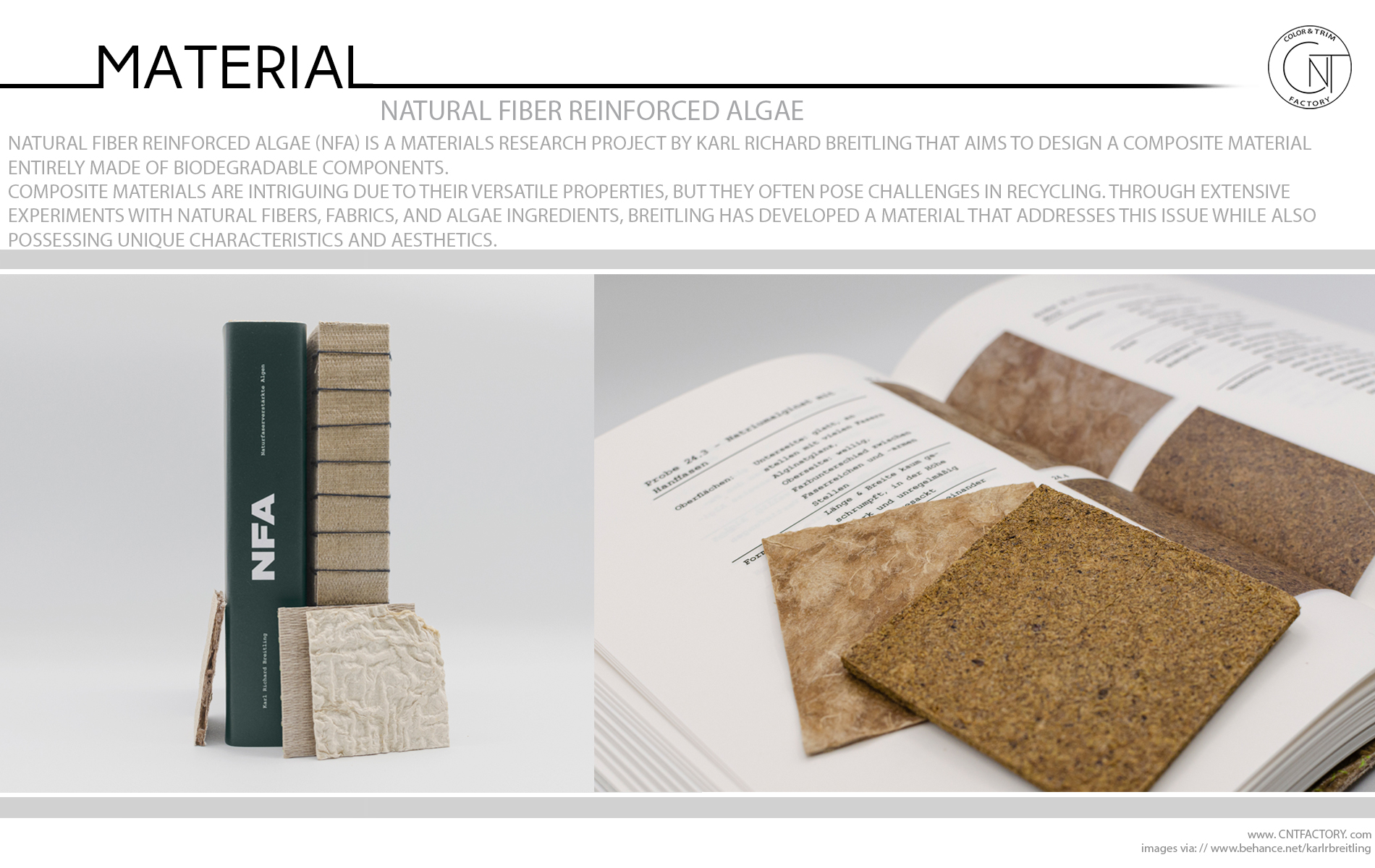
Natural fibers have long been a preferred choice in composite applications. They not only offer performance comparable to synthetic fibers but also provide additional advantages. For instance, natural fibers exhibit high vibration damping capacities, favorable fracture behavior, and their production can be both CO2-neutral and localized, enabling the realization of a closed carbon cycle.
The fibers and fabric layers are cohesively bound using algae-derived components. Specifically, my experiments focused on sodium alginate, agar, and carrageenan, which are structural constituents found in the cell walls of brown and red algae. These components are dissolved in water and subsequently laminated with fibers or fabric in a mold. Upon drying, a robust composite material is formed.
The recyclability of raw materials is essential for a sustainable economy. To assess the environmental impact of a material, its life cycle provides a comprehensive overview. Currently, there is a nutrient imbalance between land and sea. While farmland is continually fertilized, these nutrients find their way into the sea via groundwater and rivers, leading to eutrophication and subsequent algal blooms that reduce oxygen levels. Controlled cultivation of algae could serve to filter these nutrients, binding them during processing and later reintroducing them into the nutrient cycle.